
Practice notes / Chioma Sutton
Yin vs. Yang Yoga: What’s the Difference—and Why Practice Both?
Some days, you want to move, build warmth, and feel your strength. Other days, you want time to settle into a stretch & hear yourself think.
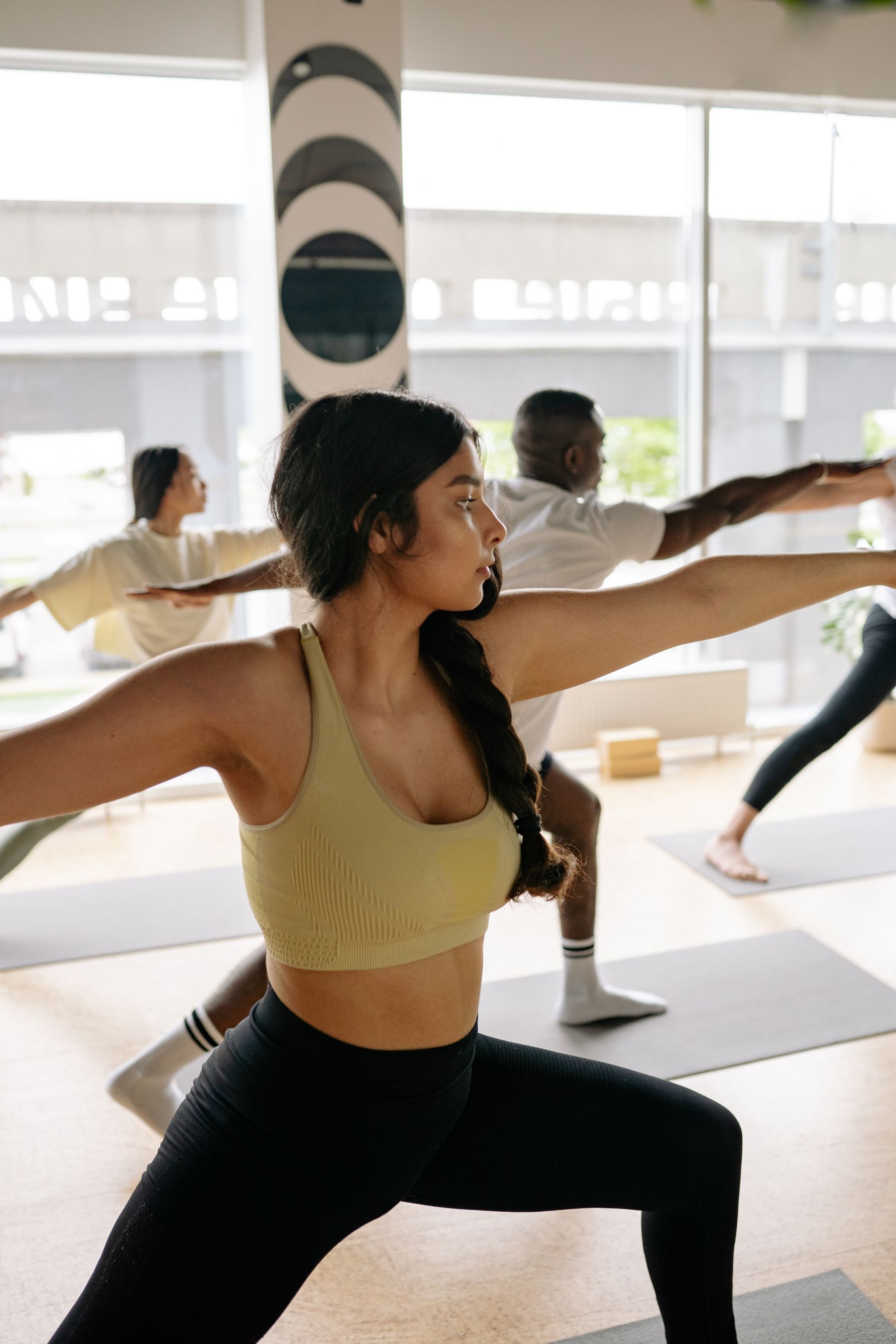
What is the difference between yin and yang yoga?
A yoga practice can make room for both. Yin and yang describe contrasting, complementary qualities. In yoga, these terms help distinguish quieter, sustained work from more active movement. Understanding the difference can help you choose a class with greater intention—and discover what you might be missing when you always practice at the same pace.
Yin yoga generally emphasizes longer-held, relatively passive postures. Yang describes more active approaches that involve muscular effort, movement, and often a greater build of warmth.
“Yang yoga” is an umbrella description rather than one standardized style. A dynamic flow & an active standing sequence can both have yang qualities.
Neither approach is inherently better. They ask different things of your attention and your body.
What does yin yoga feel like?
Yin invites you to settle into a posture & explore it without rushing to the next. Often seated or lying down, with props as needed, you have time to notice sensation and your response to stillness.
Like somatic movement, yin encourages you to sense your body from within. Small, deliberate adjustments help you respond to what you feel rather than pursue a particular shape.
The quieter pace can still ask for patience and discernment. The intention is awareness, not intensity. A longer hold is never a reason to override your body’s signals.
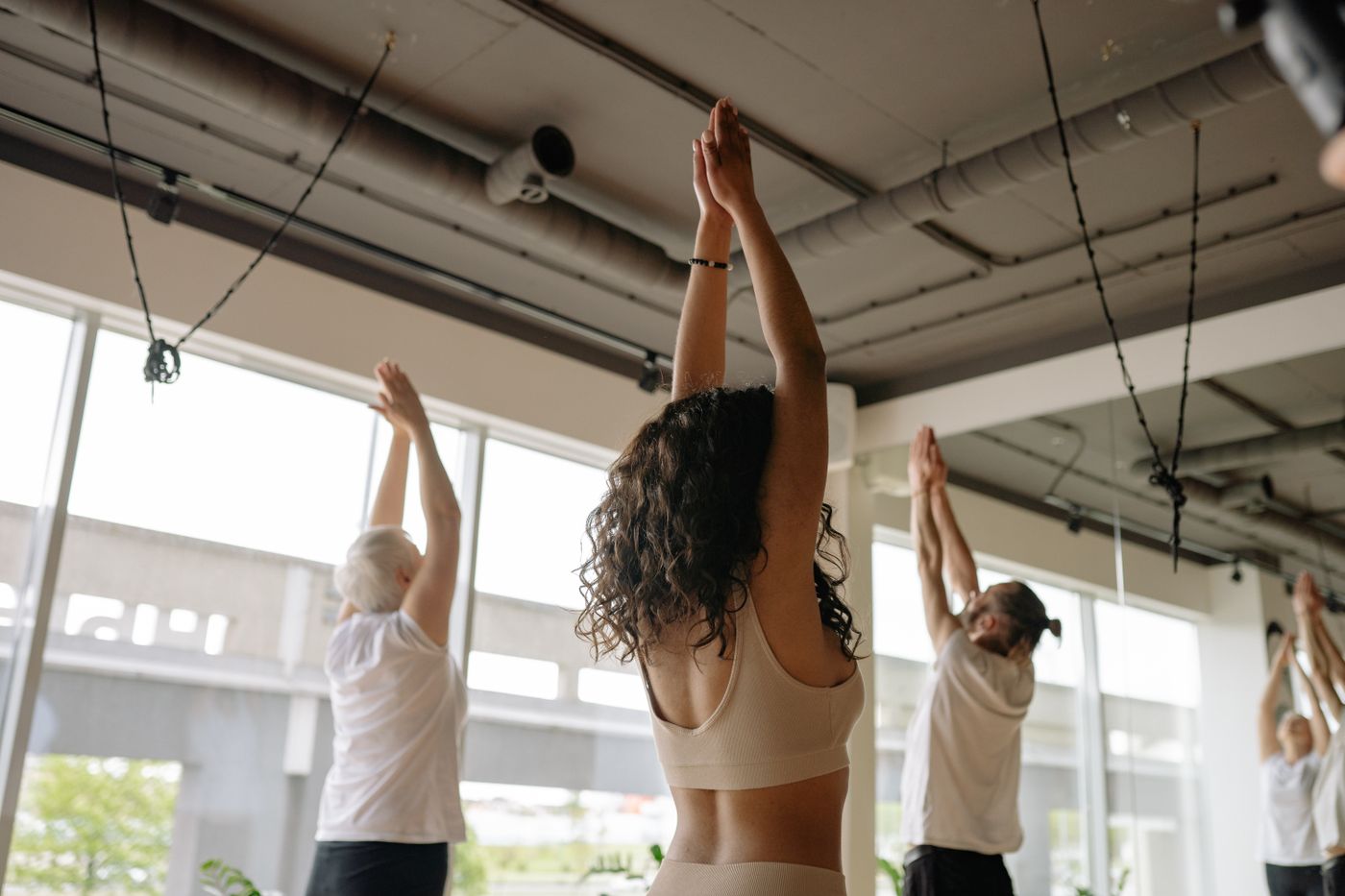
What does yang yoga feel like?
Yang-oriented practices—such as Vinyasa Flow, Ashtanga, and Sculpt Yoga—emphasize muscular engagement and purposeful movement. You might flow through sun salutations, build strength in standing poses, or explore balance through deliberate transitions.
The pace can vary. A slow, controlled sequence can be just as demanding as a faster flow.
Throughout this practice, notice how you support yourself: where you place your feet, how you distribute your weight, and whether your breath remains steady as the effort builds. These details turn movement into an exploration of strength, alignment, and body awareness.
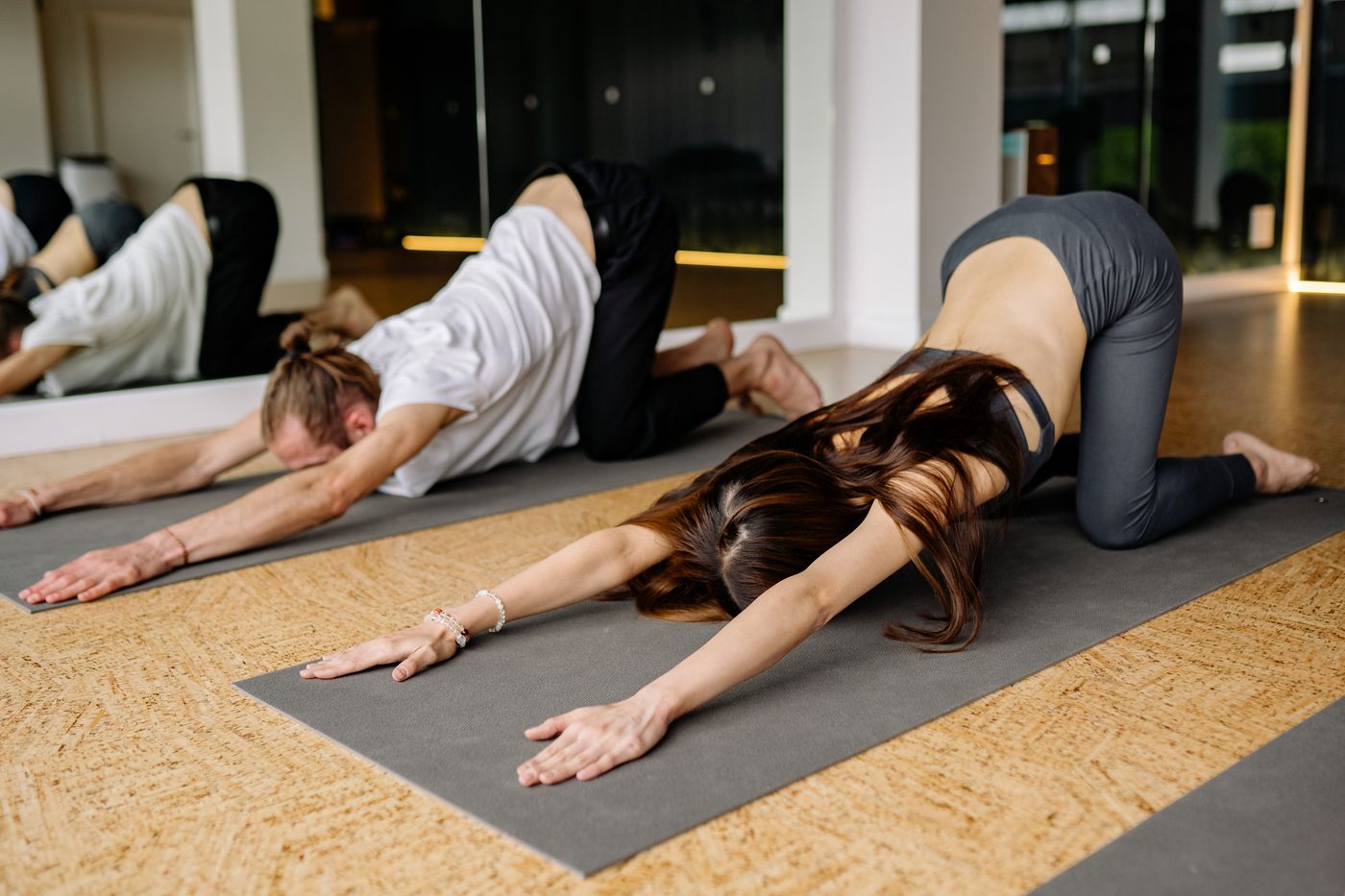
Why combine yin and yang?
Combining yin and yang invites you to explore strength and softness with equal attention. Active movement builds warmth and brings muscular effort into focus; slower, sustained stretches offer time to notice where you can soften or adjust. A somatic approach connects the two: sensing your body from within and letting that feedback inform how you move, hold, and transition.
This is the heart of Stretch TF Out at Radha—purposeful movement, thoughtful alignment, and unhurried stretches that deepen body awareness.
Over time, the practice becomes an exercise in discernment: recognizing when to engage, when to make a change, and when to ease back.
Alignment is a conversation with your body
My approach to alignment draws on my background in health sciences, physical therapy, dance, somatic movement, bodywork and yoga.
I encourage students to look beyond reproducing a shape. A pose becomes more useful when you understand what you’re doing within it.
Questions worth exploring include:
- Where am I placing my weight?
- Where do I feel myself bracing and/or holding?
- Can I breathe comfortably here?
- Would a smaller range or a prop give me more control?
- What changes when I stop trying to go farther?
These questions belong in both active sequences and quieter stretches. They help turn a class into an ongoing practice of observation.
Explore more in What Is Somatic Yoga?
Is yin yoga the same as restorative yoga?
They can look similar, but their intentions differ.
Yin typically includes sustained stretches with noticeable sensation. Restorative yoga emphasizes comfortable support & rest, often using props to reduce effort.
If you’re choosing between them, read the class description rather than relying on the word “gentle.” A quiet class can still be demanding.
How do you choose the right class?
Consider the experience you want, your familiarity with the movements, and the guidance available.
Looking for active movement and sustained stretching? A yin-yang class offers room to explore both.
Wanting a quieter, supported experience? A restorative class may be a better match.
Building your foundations? Look for clear instruction, an approachable pace, and opportunities to ask questions.
If you’re unsure, speak with the teacher before booking. Describe what you’re looking for and any relevant movement needs.
Explore yin-yang yoga with Radha
Stretch TF Out brings energizing sequences and slower stretches into one thoughtfully paced class. Build heat, explore alignment, and deepen your awareness of how your body moves and feels.
Practice live from the comfort of your own space, with guidance that encourages curiosity over comparison.
Chioma Sutton is the founder of Radha Yoga LA, a yoga teacher, and a licensed massage therapist with a degree in Health Science. Her teaching brings together movement, bodywork, breath, and cultural expression, with an emphasis on alignment, body awareness, and individual exploration.
Meet Chioma →